My Enquiry (0)
No artwork has been selected.
Please choose an artwork to enquire.
Enquiry Submitted
Thank you for your enquiry and interest in our artists’ work. A member of the gallery team will respond shortly.
000%


21 - 25 May 2025 Booth A7 Shepstone Gardens
Southern Guild will participate in RMB Latitudes Art Fair 2025 at Shepstone Gardens in Johannesburg with a dual presentation of new work by Xanthe Somers and Terence Maluleke.
The winner of Latitude’s annual ANNA Award last year, Somers will debut a series of large-scale ceramic sculptures as a special project at the fair. Maluleke will exhibit mixed-media paintings paying intimate homage to the city of Joburg, where he lives and works.


Xanthe Somers: Wearing Thin
A Zimbabwean ceramic artist based in London, Somers created her new body of work in Cape Town whilst on an artist residency that formed part of her ANNA Award. The collection of braided vessel-like forms is a progression from the monumental pieces inher 2024 solo presentation, Invisible Hand, which explored traditions of basket-making in Zimbabwe and the value of women’s work in post-colonial contexts. Titled Wearing Thin, the latest series is marked by a sense of unravelling: the works’ surfaces are articulated by interwoven strands of clay that have become untethered at certain junctures. Their rotund forms buckle inwards as they seem to succumb to their own weight. A fissure interrupts the warp and weft of a tall ovoid vessel and everywhere the fringes begin to fray.
It is this locus of tension – between containment and collapse, connection and disintegration – that Somers seeks to examine as she teases apart the threads of our social fabric to expose some of the darkness within. “Weaving is so much about finding commonality – pulling out one thread is not the same as having it all woven together. But I’m also cognizant of the violence that comes with not being included in the narrative. This work is situated between the two, recognising that weaving can be quite robust but also very fragile,” she notes.
Weaving is a powerful metaphor for social cohesion, storytelling, and the slow and repetitive nature of domestic work – cleaning, mending, stitching, sewing, cooking. In their exuberant display of colour and attention to scale, Somers’ ceramics celebrate the creativity and mindfulness inherent in all these associations, but in exploring the limits of their making – and by implication, their functionality – she points to some of the structural imbalances too. It is commonly accepted that gender divides prioritise formal work over domestic work and care-taking in capitalist economies, and undervalue handicraft in contrast to art (traditionally the purview of men). Yet, even more insidious than these divides, is the intersection of race, gender and class that forms the very foundation of our current milieu. In her essay “Capitalocene, Waste, Race, and Gender”, political theorist Françoise Vergès draws attention to the invisibility of women of colour whose contribution – as cleaners and care-takers – enables neoliberal and patriarchal capitalism to function. She points to the dialectical relation between “the white male performing body and the racialised female exhausted body”, between “the visibility of the final product of the cleaning/caring and the invisibility, along with the feminisation and racialisation […] of the workers who do this cleaning/caring”.
The series also reflects on the power of cloth and clay to hold narrative, carrying symbols and images that speak of historic events, convey standards of beauty and display political allegiances. Somers is interested in how contemporary material culture bears the legacy of colonialism by conveying Western conceptions of womanhood and aesthetic value, perpetuating the erasure of indigenous traditions and principles.


Terence Maluleke: A Love Letter to Joburg, First Draft
Maluleke’s new series of paintings, A Love Letter to Joburg, First Draft, spring from a deep engagement with and love for the urban fabric of his birthplace – the shifting terrain of a city in the constant process of being made, and remade, by its enterprising, everyday inhabitants. Born and raised in Soweto, he recalls minibus taxi rides with his mother to buy bulk items at inner-city wholesale stores: “As you arrived in the city, there was a sensation of going inside a humming, moving machine. There was something enticing about the towering buildings, the buzz, the feeling that really important things took place there.”
As a student at the National School of the Arts in Braamfontein, Maluleke began to form his own internal map of the city, learning to navigate its more dangerous spots and finding a sense of beauty and community among the informal traders, street vendors, commuters and residents sharing the streets. “Many of these people are occupying space they shouldn’t, but as a community, they are making it work together. There is a deep human intent and a spirit of collaboration to survive in this environment, to improvise infrastructure and create a livelihood.”
Made in his studio in Doornfontein, Maluleke’s paintings capture both real and imagined vignettes of public and private life: an indoor scene of lovers locked in an embrace, safe from the orange flares of gunfire outside; a pair of squawking hadedas – Joburg’s ubiquitous birds – perched atop a stack of plastic chairs; a potted plant at a window overlooking warehouses and the Hillbrow Tower. His narrative approach encompasses the somber reality of life on the economic margins with a portrait of an exhausted zama zama (illegal miner), taking stock of the tragic price paid by others who have ventured into abandoned mines. Maluleke’s palette is suffused with yellow tones calling to mind the city’s infamous mine dumps and vistas of sun-bleached veld, but simultaneously registering beats of hope and optimism too.
He leans into abstraction, fragmenting his picture plane into multiple perspectives and turning burglar bars and checkerboard flooring into framing devices. Mixing charcoal and pencilwork with paint, Maluleke builds textured layers and keeps much of his linework visible. His brushwork stops just short of the canvas edge – in progress, rugged and exposed. There’s a defiance and a humanity about the world he is building in this new body of work, whose inhabitants “have a disregard for a system that sometimes feels like it’s not for them. But they still occupy it. It’s as if they are saying ‘Before the system catches up, you’ll find us here. There is a gap that needs to be filled and that’s where you’ll find us.’”
Artists
Works


Terence Maluleke
I was made for your chaos, 2025Acrylic on canvas
70.8 x 61 in. | 180 x 155 cm
Sold


Xanthe Somers
Pulling at Threads, 2025Glazed stoneware
33.5 x 21.3 x 20.1 in. | 85 x 54 x 51 cm
Sold
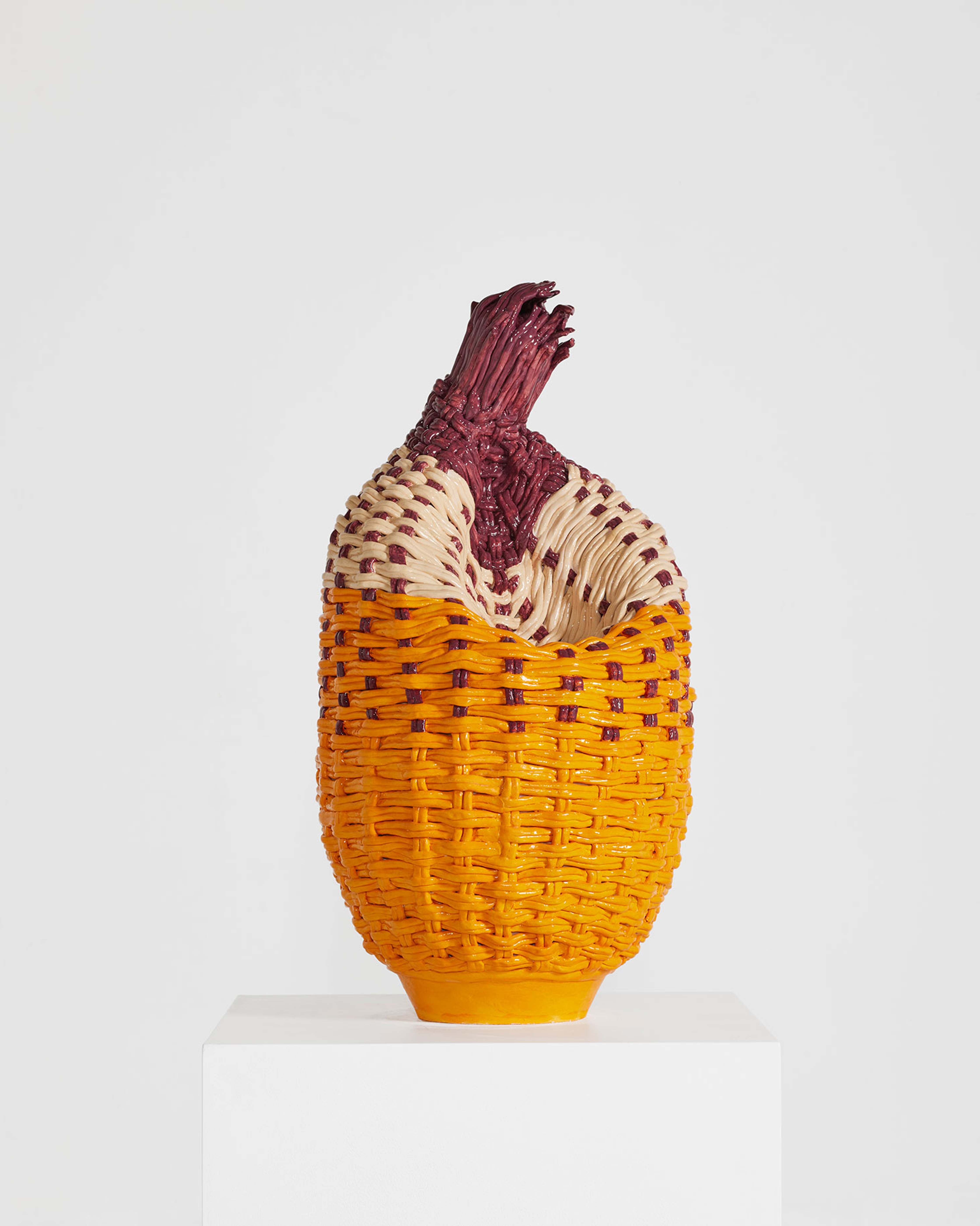
Xanthe Somers
Between Cloth and Clay, 2025Glazed stoneware
39.8 x 20.1 x 20.1 in. | 101 x 51 x 51 cm
Sold
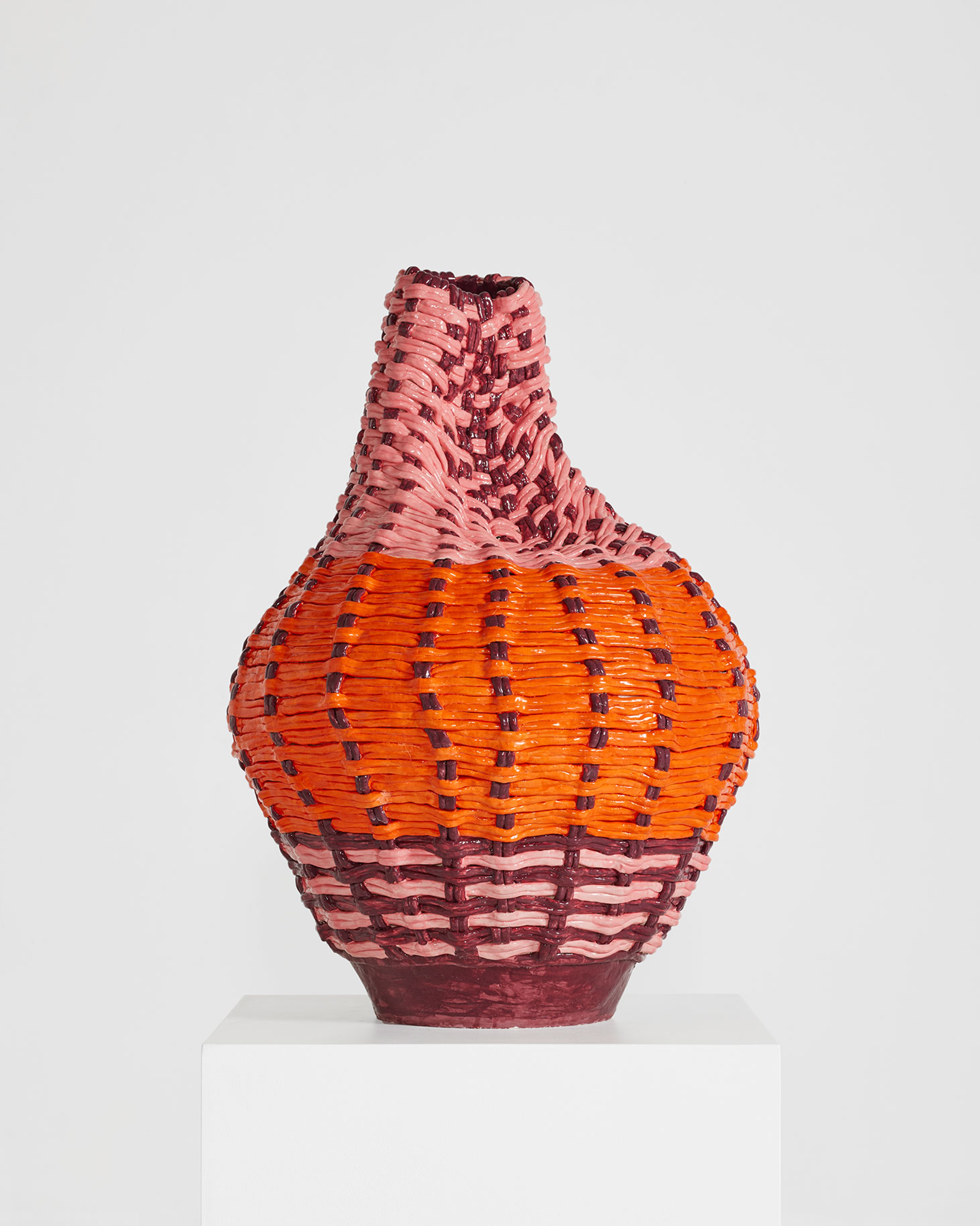
Xanthe Somers
By the Pricking of My Thumbs, 2025Glazed stoneware
39.4 x 27.6 x 27.8 in. | 100 x 70 x 70.5 cm
Sold

Xanthe Somers
Behind My Mother’s Apron, 2025Glazed stoneware
33.9 x 20.1 x 18.9 in. | 86 x 51 x 48 cm
Sold